
 501, Fifth Avenue, Suite 805 New York, NY 10017
 info@techwize.com
 +1 (949) 887-0154
 TechWize
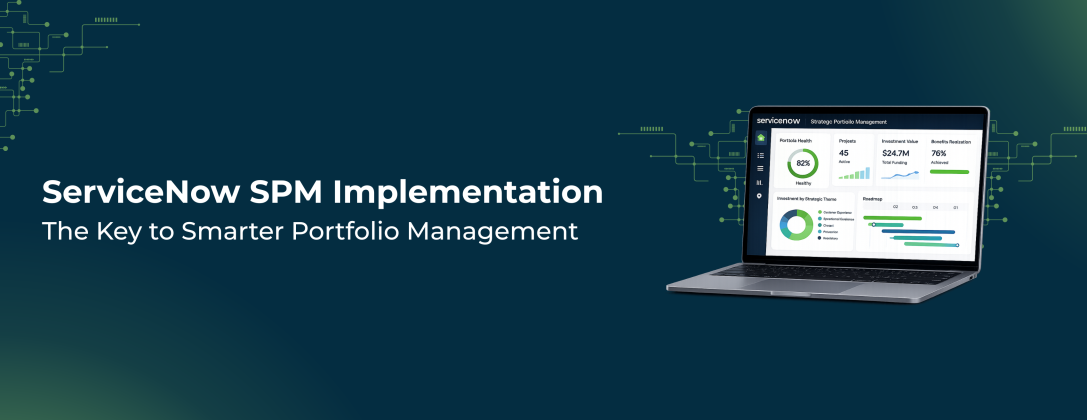
Most organizations do not have a strategy problem. They have a translation problem.
Leadership sets direction. Teams receive tasks. But somewhere in between, context gets lost, priorities get misread, and delivery moves ahead without a clear line back to what actually matters. The result is a portfolio that looks active on paper but feels misaligned in practice.
This is not a new problem. It has existed for decades across industries, functions, and organization sizes. What has changed is the availability of platforms specifically designed to fix it. ServiceNow Strategic Portfolio Management (SPM) is one of the most capable of those platforms. But even the best tool only delivers value when it is implemented correctly, configured thoughtfully, and supported by people who understand how strategy, demand, and delivery are meant to work together.
This blog breaks down how ServiceNow SPM Solutions are built, what they actually solve, and why the right implementation partner makes all the difference.
Why Strategy, Demand, and Delivery Do Not Work Together
The disconnection between strategy and execution is not usually the result of poor intentions. It happens because most organizations rely on separate systems, spreadsheets, and manual processes to manage each layer of their portfolio.
Strategy lives in executive presentations. Demand comes in through emails, project intake forms, and informal requests. Delivery happens inside project management tools that were never designed to reflect strategic intent. None of these layers communicates cleanly with each other, which means every decision about what to fund, prioritize, or resource requires someone to manually reconcile information from multiple sources.
By the time that reconciliation happens, something has already changed. A new request has come in. A project has fallen behind. A priority has shifted. And the portfolio manager is left reacting instead of leading.
This is the environment that ServiceNow SPM was designed to address.
What ServiceNow SPM Solutions Are Actually Built to Solve
ServiceNow SPM Solutions are not simply a project tracking upgrade. The platform is designed to bring strategic planning, investment management, demand capture, resource allocation, and delivery execution into a single connected system.
At the core of SPM is the idea that every piece of work should be traceable back to a business outcome. A project is not just a set of tasks. It is an investment tied to a capability, aligned to a strategic objective, funded through an approved budget, and staffed by resources whose availability is known in real time.
When those connections exist, portfolio leaders can make faster, more informed decisions. They can see which demands align with the current strategy and which do not. They can model the financial impact of saying yes or no to a request. They can identify resource bottlenecks before they become delivery failures. And they can present a portfolio view to executives that reflects actual business intent rather than a snapshot of activity.
This is the difference between managing work and managing a portfolio with purpose.
How ServiceNow SPM Implementation Helps You Manage Demand the Right Way
One of the most immediate benefits of a well-executed ServiceNow SPM Implementation Services engagement is the transformation of how demand is captured and evaluated.
In most organizations, demand enters the portfolio through informal channels. Someone sends an email. A stakeholder mentions a need in a meeting. A department head submits a spreadsheet with a list of requests and no supporting context. Without a structured intake process, portfolio managers cannot compare requests fairly, assess their strategic fit, or understand their resource implications.
ServiceNow SPM changes this by giving every demand request a structured home. When intake is configured correctly, each request captures the right information from the start: business justification, estimated effort, expected value, alignment to strategic goals, and the cost of delay if the request is deprioritized.
This structure makes the evaluation process repeatable and transparent. Instead of relying on whoever advocates loudest in the next steering committee meeting, portfolio managers can score and prioritize requests against consistent criteria. Stakeholders get visibility into where their requests stand and why. Leaders get a demand pipeline that reflects real organizational need rather than political noise.
When paired with broader ServiceNow implementation Service capabilities, this kind of structured demand management can transform how an entire organization thinks about intake, approval, and prioritization.
How Delivery Teams Get Better Context With ServiceNow SPM
A common frustration among delivery teams is that they are handed work without enough context to execute it well. They know what they are supposed to build, but not why it matters, how it connects to broader goals, or what trade-offs were made to fund it.
ServiceNow SPM addresses this by maintaining a traceable connection between strategy and delivery at every stage of the portfolio lifecycle. A project manager working inside the platform can see the strategic initiative their project supports, the investment bucket it belongs to, and the expected outcomes it is meant to drive. That context is not buried in a separate document or locked in an executive's head. It lives in the same system where work is being planned and tracked.
This traceability also improves how delivery teams communicate upward. Instead of manually compiling status updates for leadership, they can rely on real-time dashboards that surface the information leaders actually care about: which projects are on track, which are at risk, where resources are constrained, and whether the portfolio is still aligned to its original intent.
The result is fewer status meetings, less time spent on reporting, and more time spent on actual delivery. Teams that have gone through a well-planned ServiceNow SPM Consulting Company engagement consistently report that this shift in how information flows changes the dynamic between delivery and leadership in a meaningful way.
How Strategy, Funding, and Delivery Connect Inside ServiceNow SPM
The most powerful aspect of ServiceNow SPM is not any single feature. It is the way the platform connects layers that have historically operated in isolation.
Strategy is expressed through strategic goals and investment themes. Those themes are linked to portfolios and programs. Programs are funded through investment buckets that reflect the organization's budget commitments. Projects within those programs are staffed using real resource data. And delivery progress is tracked in a way that surfaces financial and schedule risk early enough to act on it.
This connected architecture means that a change at any level ripples through the system in a visible way. If a strategic priority shifts, portfolio leaders can immediately see which programs and projects are affected. If a project runs over budget, the financial impact on the investment bucket is visible without waiting for a finance team to run a reconciliation report. If a key resource becomes unavailable, the schedule impact is surfaced before it becomes a missed deadline.
For organizations that also leverage ServiceNow AI Agent Implementation Solutions, this connected data model becomes even more powerful. AI capabilities can surface patterns, flag anomalies, and recommend portfolio adjustments based on real-time signals that no human analyst could process at the same speed or scale.
Why ServiceNow SPM Implementation Matters More Than the Tool Itself
A platform as capable as ServiceNow SPM can deliver extraordinary value. It can also sit largely unused if it is not implemented in a way that fits how the organization actually works.
This is where many organizations make a costly mistake. They focus on licensing the platform and assume that deployment will follow naturally. But SPM is not a plug-and-play tool. It requires deliberate decisions about how intake is structured, how investment themes are defined, how resource models are configured, and how roles and permissions are set up to support real workflows.
Without those decisions being made thoughtfully, the platform ends up configured around what was easiest rather than what was right. Teams work around it instead of through it. Data quality deteriorates. Adoption stalls. And leadership loses confidence in the portfolio view that the platform was supposed to provide.
This is why the implementation approach matters as much as the platform itself. Organizations that invest in getting the configuration right from the start, building data governance processes alongside the technical setup, and training users in a way that connects the tool to their actual job responsibilities, consistently see better outcomes than those that treat implementation as a purely technical exercise.
For context, organizations that have also gone through ServiceNow CSM Services implementations understand this dynamic well. The pattern holds across ServiceNow products: thoughtful implementation produces results, rushed deployment produces regret.
Choosing the Right ServiceNow SPM Implementation Company
Not every ServiceNow partner is equally equipped to deliver an SPM implementation. The platform covers a broad set of capabilities, and doing it well requires consultants who understand portfolio management as a discipline, not just ServiceNow as a technology.
When evaluating a ServiceNow SPM Implementation Company, there are several things worth examining beyond certifications and case study counts.
First, look at how deeply the partner understands the business problems SPM is meant to solve. A partner who talks primarily about features and configuration steps is not the same as one who asks questions about your current intake process, your investment planning cycle, your resource model maturity, and your stakeholder reporting requirements before touching a single configuration screen.
Second, look at how the partner approaches change management. SPM implementations that fail often do so not because of technical issues but because the people who were supposed to use the platform never really adopted it. A strong implementation partner builds adoption strategies into the engagement from day one, not as an afterthought.
Third, look at the partner's track record with organizations at a similar stage of portfolio management maturity. An organization just beginning to formalize its portfolio management practice needs a different implementation approach than one that already has mature governance structures and is looking to automate and scale them.
For organizations that also manage customer-facing operations, the ability to integrate SPM insights with tools like Salesforce Service Cloud Solutions can be an additional consideration when selecting a partner with broad platform experience.

Ready to Align Your Strategy With Execution?
Stop letting disconnected tools and siloed teams slow your portfolio down. Partner with TechWize and implement ServiceNow SPM the right way – from day one.
Get a Free ConsultationHow the Right ServiceNow SPM Consulting Helps You Get Results Faster
The value of working with an experienced ServiceNow SPM Consulting Company is not just that they know the platform. They have seen what works and what does not across enough implementations to help you avoid the mistakes that slow progress.
A good consulting partner helps you make better scoping decisions at the start, so you are not trying to configure every capability at once when a phased approach would deliver faster value. They help you define your data model in a way that supports both current needs and future growth, so you are not rebuilding core structures six months after go-live. They help you establish governance processes that make the platform sustainable after the implementation team is gone, so adoption does not depend on the same few power users indefinitely.
They also help you connect SPM to the broader ServiceNow ecosystem in ways that compound value over time. Whether that means integrating with ITSM for demand capture, connecting to ITFM for financial visibility, or building bridges to agile delivery tools for teams that work in sprints, an experienced consultant knows how to make those connections work cleanly rather than introducing complexity that undermines the platform's usability.
TechWize – Your Trusted ServiceNow SPM Implementation Company
TechWize is a ServiceNow-focused implementation partner that brings deep expertise across the full ServiceNow platform, with specialized experience in Strategic Portfolio Management.
What sets TechWize apart is not just technical knowledge. It is the combination of portfolio management consulting experience and platform implementation skill that allows TechWize teams to engage at the business level first. Before any configuration work begins, TechWize consultants work with clients to understand how their organization makes investment decisions, manages demand, and measures delivery performance. That understanding shapes every configuration choice, every workflow design, and every training approach that follows.
TechWize has helped organizations across industries move from fragmented portfolio management practices to connected, insight-driven portfolio operations using ServiceNow SPM. Whether the engagement starts with a rapid assessment, a phased implementation, or an optimization of an existing deployment that never fully delivered on its promise, TechWize brings the methodology and the hands-on experience to move organizations forward.
TechWize also brings breadth alongside depth. For clients looking to expand their ServiceNow footprint beyond SPM, TechWize supports implementations across ITSM, CSM, ITOM, and AI-powered capabilities, ensuring that SPM does not operate in isolation but as part of a coherent, well-integrated platform strategy.
If your organization is ready to move from reactive portfolio management to intentional, strategy-driven execution, TechWize is equipped to help you get there.
Read Similar Blog
The Complete IT Admin Guide to Smarter ServiceNow SPM Implementation
Explore More ServiceNow Insights ⬩➤Conclusion: Stop Reacting. Start Managing Your Portfolio With Intent
The gap between strategy and delivery does not close on its own. It closes when organizations build the right systems, processes, and governance structures to keep them connected through the natural turbulence of day-to-day operations.
ServiceNow SPM provides the platform. But the platform only delivers its full value when it is implemented correctly, configured to reflect how your organization actually works, and supported by users who understand how to use it to make better decisions.
The organizations that get the most from ServiceNow SPM are not the ones with the most features turned on. They are the ones who took implementation seriously, chose the right partner, and committed to using the platform as the single source of truth for portfolio decisions.
That is how you stop reacting and start leading your portfolio with intent.