
 501, Fifth Avenue, Suite 805 New York, NY 10017
 info@techwize.com
 +1 (949) 887-0154
 TechWize
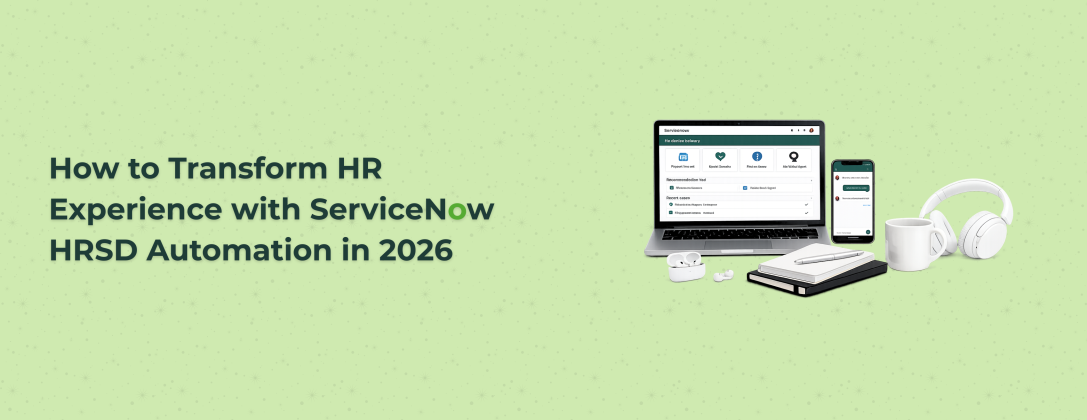
Employee patience for clunky HR processes is running out. People who can book a flight, order groceries, or reschedule a doctor's appointment in under a minute expect the same ease when they need to update a beneficiary, request parental leave, or find out how many vacation days they have left. When HR cannot deliver that same experience, the gap does not just create friction; it quietly erodes trust in the organization itself.
That is the problem ServiceNow HR Service Delivery (HRSD) was built to solve, and in 2026 the stakes around getting it right have only gone up. This guide walks through what HRSD is, why AI has become central to it, and how organizations are using ServiceNow HRSD implementations and automation to close the gap between employee expectations and what HR teams can realistically deliver.
Why Employee Expectations Are Changing in 2026
The shift is not just anecdotal. Recent industry research into HR service delivery found that a quarter of employees can only self-serve a small fraction of their needs, somewhere in the 0 to 25 percent range, and only around one in five feel they can handle almost everything on their own (source: The 2026 State of HR Service Report, Applaud HR). That is a striking number given how many organizations have already invested in HR portals and FAQ pages over the past decade.
The reason is not a lack of effort. It is that most of those earlier investments were built around static content and disconnected systems rather than intelligent, adaptive service delivery. Employees still have to know which department owns their question, which form to fill out, and who to escalate to when nothing happens. In 2026, that is no longer acceptable, especially as hybrid work, multi-generational workforces, and global teams add more complexity to every HR interaction.
Organizations that fail to modernize are not just risking a few frustrated employees. They are risking productivity, engagement, and their ability to compete for talent in a market where the employee experience has become a genuine differentiator.
What Is ServiceNow HR Service Delivery?
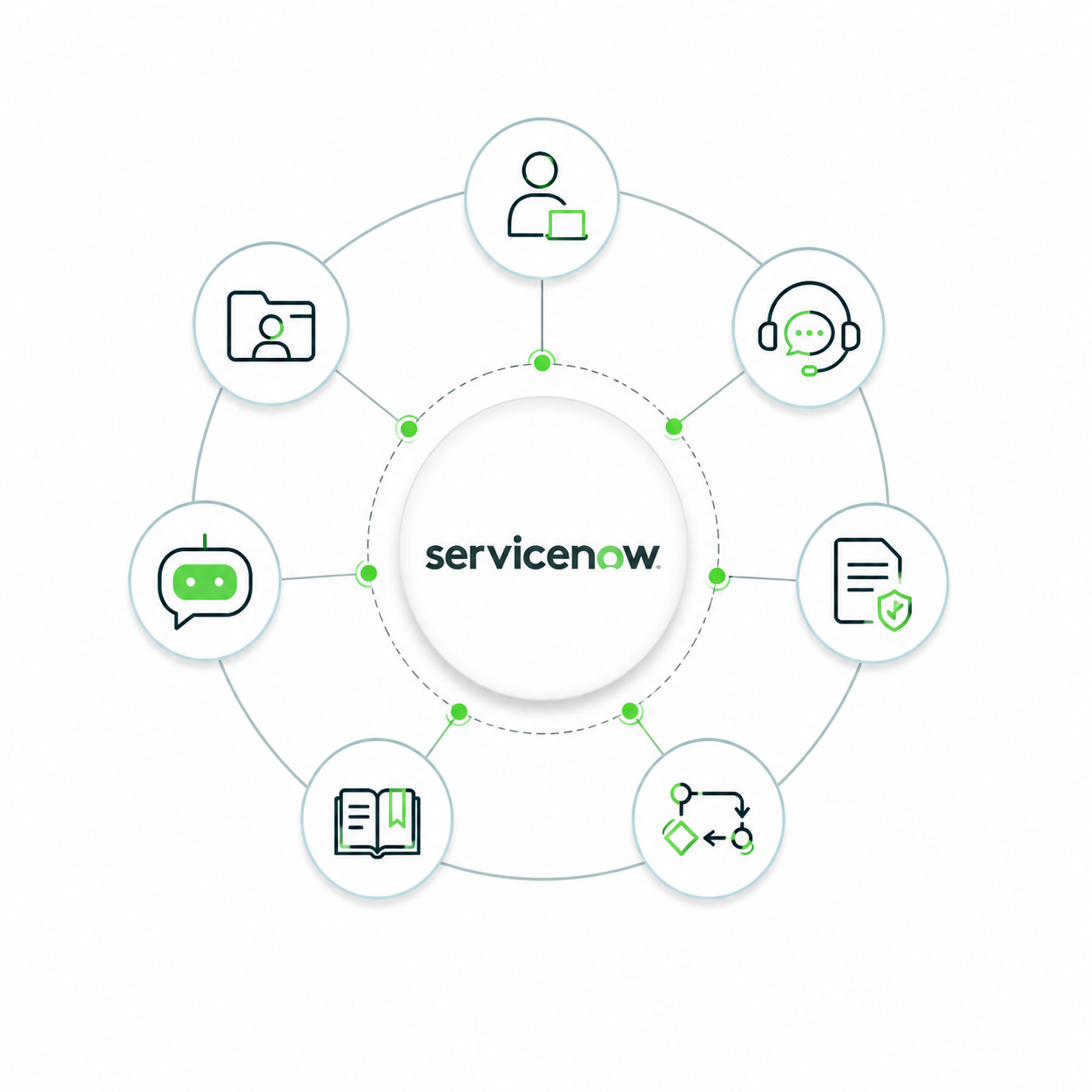
ServiceNow HR Service Delivery is a platform that brings HR processes, employee interactions, and case handling into one connected system, replacing the shared inboxes, spreadsheets, and disjointed tools that slow so many HR teams down.
At its core, HRSD is built around a handful of connected capabilities:
- Employee Center – a single, personalized front door for every HR interaction
- HR Case Management – structured, trackable handling of employee requests
- Employee Document Management – secure, compliant storage for sensitive records
- Lifecycle Events – automated workflows for onboarding, transfers, and offboarding
- Knowledge Management – a searchable, centralized policy and FAQ library
- Virtual Agent – conversational AI for everyday HR questions
- Now Assist for HRSD – generative AI that supports case summarization and content creation
None of these capabilities work in isolation. The value comes from how they connect, so an employee's onboarding case, their document uploads, their knowledge searches, and their eventual case history all live in the same system rather than scattered across five different tools.
AI Trends Shaping HR Service Delivery in 2026
AI adoption inside HR has moved well past the pilot stage. Gartner research now puts AI use in at least one HR function above 70 percent among large enterprises (source: PeoplePilot, AI in HR Statistics 2026), and separate research shows roughly four in ten HR leaders have either implemented generative AI already or plan to in the near term (source: Zapier, 83 AI Statistics to Boost Your Growth in 2026).
What has changed is not just how many organizations are using AI, but where. Early HR AI efforts concentrated heavily on recruiting. In 2026, that focus has broadened into service delivery itself: case summarization, intelligent search, personalized knowledge recommendations, and conversational support for routine questions. This mirrors a similar shift in customer-facing functions, where platforms like ServiceNow CSM are applying the same AI-driven case-deflection logic to customer support that HRSD applies to the employee experience.
The organizations seeing the strongest returns are not the ones simply switching AI on. Gartner reports that high-impact AI HR programs can deliver 200 to 500 percent ROI in their first year, but only when the tools are deployed with clear use cases and proper governance behind them (source: PeoplePilot, AI in HR Statistics 2026).
Why ServiceNow HRSD Implementation Matters for Growing Organizations
A rushed or poorly scoped ServiceNow HRSD implementation can leave an organization with an expensive platform that nobody actually uses. That risk is well documented: change management makes or breaks adoption. Organizations that invest properly in change management during rollout see portal adoption rates exceed 85 percent within six months, compared to just 40 to 50 percent adoption when change management is treated as an afterthought (source: SnowGeek Solutions, 7 Mistakes You're Making with ServiceNow HRSD Implementation).
This is precisely why implementation strategy matters as much as the platform itself. HRSD tends to fit best in organizations with 1,000 to 10,000 or more employees that need to orchestrate complex, cross-departmental workflows spanning HR, IT, and facilities (source: HR.software, ServiceNow HRSD Review 2026). For growing organizations approaching that scale, getting the implementation sequence right, starting with foundational case management before layering in more advanced automation, determines whether HRSD becomes a genuine operational asset or just another underused system.
A phased rollout approach, where quick wins are delivered early to build momentum, has been shown to push self-service adoption above 78 percent within the first 90 days (source: SnowGeek Solutions, 7 Mistakes You're Making with ServiceNow HRSD Implementation). That early credibility is often what secures the budget and internal buy-in needed for the next phase of automation.
Streamlining Onboarding and Transitions Through HRSD Automation
Few moments matter more to an employee's long-term engagement than their first weeks on the job, and few processes involve more moving parts. A single onboarding case might require coordination across HR, IT provisioning, facilities access, security clearance, and a hiring manager's own checklist.
ServiceNow Lifecycle Events automates this coordination, whether the event is onboarding, an internal transfer, a promotion, a role change, or offboarding. Instead of relying on someone to remember to email five different teams, the workflow automatically triggers the appropriate tasks, approvals, and notifications in the correct order.
The impact of this kind of automation is clear in deployment data. At Mondelez, employee self-service rose by 76 percent following an HRSD rollout, with around 80 percent of common HR questions answered directly from the knowledge base, across sixteen languages, without ever reaching a live agent (source: The Negotiation Experts, ServiceNow HRSD Licensing and ROI Analysis). That is the kind of deflection that frees HR teams from repetitive administrative work and lets them focus on the transitions that genuinely need a human touch.
How ServiceNow HRSD Automation Transforms Employee Experience
.png "How to Transform HR Experience with ServiceNow HRSD Automation")
Beyond onboarding, HRSD automation reshapes the everyday moments that define how employees feel about their employer. A benefits question that used to sit in an inbox for 3 days can now be resolved in minutes via Virtual Agent. A request for an employment verification letter that once required a phone call and a follow-up email can be submitted, tracked, and resolved entirely through the Employee Center.
This consistency matters more than any single feature. Employees do not experience HR as a collection of modules; they experience it as one relationship with their employer. When that relationship is fragmented across systems, every interaction reinforces the feeling that the organization is disorganized. When it is unified through HRSD automation, every interaction reinforces the opposite.
There is also a compounding effect worth noting. As HR systems become more connected internally, the same logic tends to extend outward. Organizations already running structured case management for employees often find it easier to extend similar principles to their front office, whether that means connecting HR data with ServiceNow CRM records for a more complete view of the workforce, or aligning field-based teams through Field Service Management workflows that mirror the same automation principles used in HRSD.
The Role of AI in ServiceNow HRSD Solutions
The AI layer within ServiceNow HRSD solutions turns a well-organized system into a genuinely intelligent one. Now Assist for HRSD generates case summaries automatically, drafts responses for HR agents, and recommends relevant knowledge articles based on the specifics of an employee's question rather than a generic keyword match.
Virtual Agent extends this further by allowing employees to ask questions in natural language and receive guided, contextual answers rather than a list of search results they have to sift through themselves. Intelligent search personalizes what employees see based on their role, location, and stage in the employee lifecycle, so a new hire in one country sees different, more relevant content than a long-tenured employee elsewhere.
This same underlying approach, using AI agents to handle repetitive interactions while escalating complex cases to humans, is also reshaping other parts of the enterprise. Many of the same principles behind ServiceNow AI Agents now power HRSD's Virtual Agent and Now Assist capabilities, which is part of why organizations that have already invested in AI agent strategy elsewhere in ServiceNow often find HRSD's AI features easier to adopt.

Ready to Automate Your HR Service Delivery?
A modern HRSD rollout depends on the right implementation sequence, change management, and AI configuration from day one. TechWize helps organizations plan and deploy ServiceNow HRSD automation that drives real adoption, not shelfware.
Talk to an HRSD SpecialistMeasuring the Business Impact of ServiceNow HRSD Automation
None of this matters if it cannot be measured. Fortunately, the business case for HRSD automation is backed by solid third-party analysis. A Forrester Total Economic Impact study commissioned by ServiceNow modeled a composite organization and found $21.62 million in benefits against $6.02 million in costs over three years, resulting in a net present value of $15.6 million and a 259 percent return on investment (source: The Negotiation Experts, ServiceNow HRSD Licensing and ROI Analysis).
That value comes primarily from three sources: case deflection through self-service, reduced administrative overhead, and the consolidation of legacy HR systems into one platform. Importantly, these gains are rarely instant. Cost-per-case, deflection rates, and lifecycle cycle time typically mature over 9 to 18 months as Virtual Agent, knowledge content, and additional lifecycle events are progressively rolled out (source: The Negotiation Experts, ServiceNow HRSD Licensing and ROI Analysis).
For HR and finance leaders evaluating HRSD, the takeaway is straightforward: measure adoption and deflection rates from day one, but expect the full financial picture to build over a multi-quarter horizon, not a single deployment cycle.
TechWize: End-to-End ServiceNow HRSD Automation Implementation
Getting these results is rarely about the platform alone. It comes down to implementation discipline: the right rollout sequence, the right change management investment, and the right AI configuration from the start.
TechWize works with organizations to deliver ServiceNow HRSD implementation and automation as a complete engagement rather than a one-off deployment. That includes scoping the right phased rollout to protect early adoption momentum, configuring Now Assist and Virtual Agent around real employee use cases rather than generic templates, and building the knowledge architecture that determines whether self-service actually sticks. Because many clients are also modernizing service delivery beyond HR, TechWize's team frequently connects HRSD work to broader ServiceNow HRSD solutions across the platform, ensuring HR automation does not become isolated from the rest of the enterprise.
The goal is simple: help organizations avoid adoption pitfalls that stall so many HRSD rollouts and instead achieve measurable outcomes, higher self-service rates, faster case resolution, and stronger ROI that the platform can deliver.
Read Similar Blog
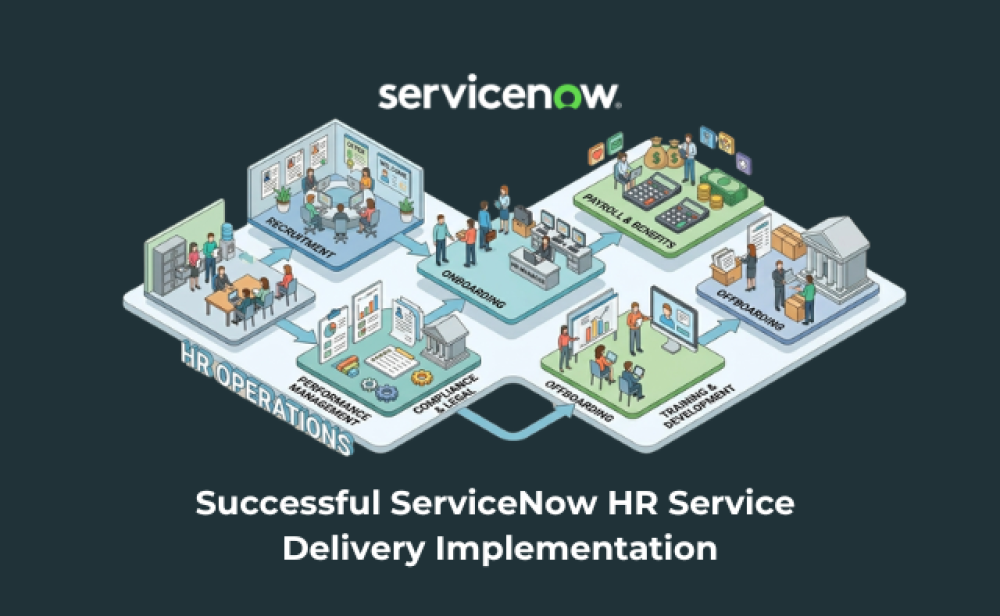
6 Key Steps for Successful ServiceNow HR Service Delivery Implementation
Explore More ServiceNow HRSD Insights ⬩➤Conclusion: Match Your Future Workforce Assessment with HRSD Automation
Employee expectations in 2026 are not going to reset to what they were five years ago. The organizations that treat HR service delivery as a strategic priority, not just an administrative function, are the ones that will keep pace with their workforce's actual needs.
ServiceNow HR Service Delivery, paired with a deliberate approach to AI and automation, gives organizations a real path to closing that gap. But the platform alone is not the differentiator. The differentiator is how thoughtfully it gets implemented, how well change management is handled, and how closely the AI capabilities are matched to genuine employee needs rather than deployed as a checkbox feature.
Before your next HRSD rollout or expansion, take a clear-eyed look at where your current employee experience actually stands against where your workforce needs it to be in the next 12 to 18 months. That assessment, more than any single feature list, is what should shape your HRSD automation roadmap going forward.