
 501, Fifth Avenue, Suite 805 New York, NY 10017
 info@techwize.com
 +1 (949) 887-0154
 TechWize
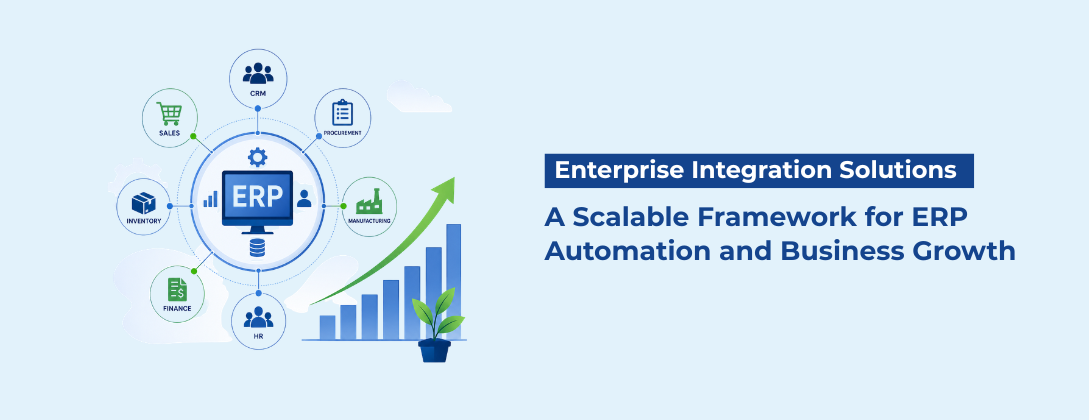
Modern enterprises operate across multiple platforms, including ERP systems, CRM applications, eCommerce platforms, supply chain software, finance tools, and cloud-based applications. While these systems support specialized business functions, they often operate independently, creating disconnected workflows and inconsistent information across departments.
When integration is handled through isolated projects rather than a long-term strategy, businesses face operational delays, duplicate records, reporting inconsistencies, and manual processes that slow decision-making. Over time, these disconnected environments create governance challenges that affect finance, operations, customer service, and compliance.
This is why Enterprise Integration Solutions have become a strategic priority for organizations pursuing digital transformation. A scalable integration strategy helps businesses connect systems, automate workflows, improve visibility, and support future growth without increasing operational complexity.
Why Enterprise Integration Solutions Are Critical for Modern Businesses
As organizations expand, their technology ecosystems become more complex. ERP systems must communicate with inventory management platforms, CRM applications, billing systems, warehouse software, and external partner networks. Without proper integration, departments rely on spreadsheets, duplicate data entry, and manual reconciliation processes to keep operations moving.
Enterprise Integration Solutions help eliminate these inefficiencies by creating structured connections between business systems. Instead of operating in silos, applications work together through governed workflows and shared data standards.
For enterprise leaders, integration is no longer just a technical requirement. It directly impacts operational efficiency, customer experience, financial visibility, and scalability. Businesses that invest in modern integration frameworks can adapt more quickly to changing market conditions while maintaining stronger control over business processes.
The Role of ERP Implementation in Enterprise Integration
ERP platforms serve as the operational backbone of modern enterprises. They centralize financial management, procurement, inventory, order processing, customer information, and reporting within a unified environment.
However, ERP systems cannot operate effectively in isolation. Businesses still depend on external platforms for CRM, logistics, HR, customer support, and eCommerce operations. This makes ERP Implementation Services critical within any enterprise integration strategy.
Successful ERP Implementation Services focus not only on deployment but also on ensuring that data flows consistently across connected applications. Integration allows ERP systems to exchange information with upstream and downstream systems without manual intervention.
An experienced ERP Consulting Company helps organizations define integration architecture, establish governance standards, and ensure ERP environments remain scalable as operational demands evolve.
Core Components Every Enterprise Integration Solution Must Have
API-Led Connectivity - Reusable, Governed Services Instead of Ad-Hoc Pipelines
API-led connectivity creates reusable service layers that allow systems to communicate through standardized interfaces. Instead of building separate integrations for every application, businesses can create governed APIs that support multiple workflows across departments.
This approach reduces technical debt while improving flexibility and long-term maintainability.
Event-Driven Architecture - Real-Time Data Flows Where Latency Is Operationally Damaging
Certain business operations require real-time updates. Inventory changes, shipment status updates, order confirmations, and financial transactions cannot rely on delayed synchronization processes.
Event-driven architecture enables systems to respond immediately to business events. This improves operational responsiveness while reducing delays across critical workflows.
Data Governance and Systems of Record - Who Owns Customer, Order, and Financial Data
Effective Enterprise Integration Solutions require clear ownership of business data. Every organization must define which system acts as the authoritative source for customer records, financial transactions, product catalogs, and operational information.
Without governance, duplicate records and inconsistent reporting become unavoidable. Establishing systems of record ensures data integrity across integrated environments.
Orchestration, Observability, and Error Handling - Governance Beyond Simple Connectivity
Integration is not limited to moving data between systems. Enterprises also need visibility into workflow performance, error management, and operational dependencies.
Workflow orchestration coordinates business processes across multiple platforms, while observability tools help IT teams monitor integration health and resolve failures before they disrupt operations.
Agentic AI and the Integration Layer - How AI Depends on Trustworthy Integration Infrastructure
AI-driven automation depends on accurate and accessible enterprise data. Intelligent workflows require secure connectivity between ERP systems, CRM platforms, operational databases, and business applications.
Without a governed integration infrastructure, AI systems cannot operate reliably. Enterprise Integration Solutions provide the connectivity foundation that enables intelligent automation across modern enterprises.
Types of Enterprise Integration: Which Approach Fits Your ERP Environment
Point-to-Point Integration
Point-to-point integration directly connects two systems for a specific workflow. While suitable for small environments, this approach becomes difficult to manage as the number of systems grows.
Large enterprises often struggle with maintenance complexity and limited visibility when relying heavily on point-to-point integrations.
Middleware and ESB
Enterprise Service Bus (ESB) platforms introduced centralized integration management for enterprise environments. These architectures support message routing, transformation, and system connectivity across large organizations.
Although effective for traditional infrastructures, ESB models may lack the agility required for modern cloud-based environments.
iPaaS and Cloud Integration Platforms
Modern Enterprise Integration Solutions increasingly rely on Integration Platform as a Service (iPaaS) technologies. These platforms simplify integration management through cloud-native architecture, reusable connectors, workflow automation, and centralized governance.
iPaaS environments support faster deployment while reducing infrastructure management overhead.
AI-Powered and Intelligent Automation Integrations
AI-powered integrations combine automation, workflow intelligence, and predictive decision-making capabilities. These solutions help enterprises automate repetitive tasks while improving operational responsiveness across departments.
As organizations adopt intelligent business operations, AI-enabled integration strategies are increasingly important.
How ERP Consulting Companies Help Build Scalable Integration Strategies
An ERP Consulting Company plays a critical role in designing scalable integration frameworks aligned with long-term business goals.
Consultants help organizations evaluate existing infrastructure, identify integration gaps, define governance standards, and select appropriate technologies for operational requirements. They also guide businesses through ERP modernization initiatives while reducing implementation risks.
Experienced ERP Consulting Companies ensure integration strategies remain sustainable as organizations expand into new markets, onboard new applications, or restructure operational workflows.
How to Build an Enterprise Integration Strategy: A Step-by-Step Framework
Step 1: Audit Your Current Integration Landscape - Map Every Connection and Gap
Organizations should begin by documenting all existing integrations, manual workflows, data dependencies, and disconnected systems. This helps identify operational risks and technical limitations.
Step 2: Define Data Ownership and Systems of Record Before Designing Any Workflow
Businesses must establish authoritative systems for customer, financial, inventory, and operational data before building automated workflows.
Step 3: Choose an Integration Architecture and Governance Model
Selecting between API-led architecture, event-driven models, middleware, or cloud integration platforms depends on operational complexity and business objectives.
Step 4: Select the Right Platform - Architecture Defines Requirements, Not Feature Comparisons
Technology selection should align with governance requirements, scalability goals, and integration complexity rather than focusing only on platform features.
Step 5: Govern Continuously - Audits, Deprecation Cycles, and a Forward-Looking Roadmap
Enterprise integration requires ongoing governance, monitoring, workflow optimization, and system lifecycle management to maintain long-term stability.

Build a Connected Enterprise with Scalable Integration Solutions
Eliminate disconnected workflows, automate ERP operations, and create a future-ready integration framework that supports long-term business growth and operational efficiency.
Talk to Integration ExpertsBest Practices for Implementing Enterprise Integration Solutions
Successful Enterprise Integration Solutions depend on governance, scalability, and operational consistency.
Organizations should prioritize reusable APIs, standardized workflows, centralized monitoring, and secure data exchange protocols. Integration governance should also include documentation standards, workflow ownership, and compliance management procedures.
Businesses that approach integration strategically can reduce operational complexity while improving visibility across departments and platforms.
Real-World Business Use Cases of Enterprise Integration
Enterprise integration supports operational efficiency across multiple business functions.
In lead-to-cash workflows, integrations connect CRM systems, ERP platforms, billing applications, and finance tools to streamline customer onboarding and invoicing processes.
To support operations, integration synchronizes eCommerce platforms, warehouse systems, shipping providers, and ERP applications to improve fulfillment visibility.
Customer support environments also benefit from integration, which connects case management systems to ERP records, customer history, and financial information, enabling faster issue resolution.
Why Businesses Choose TechWize for Enterprise Integration and ERP Services
TechWize delivers Enterprise Integration Solutions designed to support scalable automation, connected business operations, and long-term digital transformation goals. With deep expertise across ERP ecosystems, cloud platforms, CRM environments, and workflow automation technologies, TechWize helps enterprises simplify complex integration challenges.
As an experienced ERP Consulting Company, TechWize provides strategic guidance across ERP modernization, system connectivity, governance planning, and enterprise automation initiatives. Their ERP Implementation Services focus on creating scalable integration architectures that improve operational efficiency while supporting future business growth.
By combining integration expertise with industry-focused consulting, TechWize helps organizations build connected, intelligent, and resilient enterprise environments.
Read Similar Blog
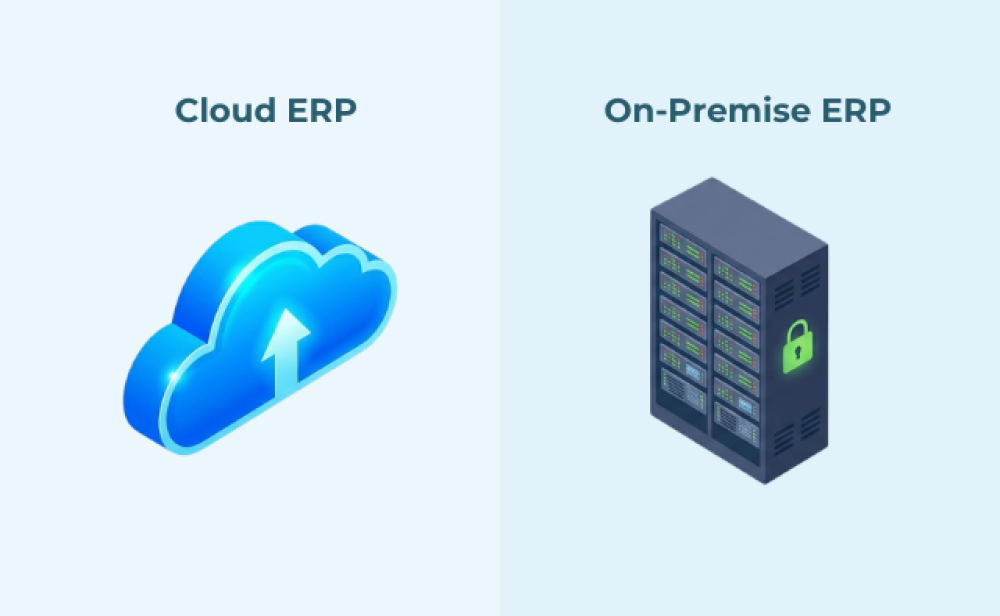
Cloud vs On-Premise ERP: Which One Keeps Your Data Safer?
Read the Complete Guide ⬩➤Conclusion: Integration Is Infrastructure - Build It That Way
Enterprise integration is no longer a supporting IT initiative. It is foundational infrastructure that determines how efficiently organizations operate, scale, and adapt to change.
Businesses that treat integration as a long-term strategic capability gain stronger operational visibility, more reliable automation, and greater agility across business functions. Modern ERP environments depend on governed integration frameworks that connect systems, standardize workflows, and support intelligent automation initiatives.
With the right Enterprise Integration Solutions, ERP Implementation Services, and ERP Consulting Company expertise, organizations can transform fragmented systems into connected ecosystems that support long-term business growth and operational resilience.