
 501, Fifth Avenue, Suite 805 New York, NY 10017
 info@techwize.com
 +1 (949) 887-0154
 TechWize
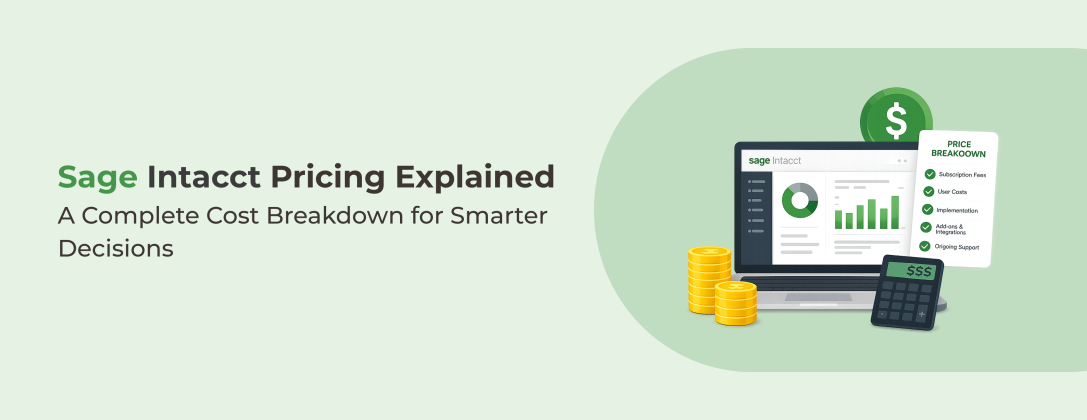
Navigating the financial software landscape can be a daunting task for any organization. As businesses scale, the limitations of entry-level accounting systems become glaringly obvious, prompting a necessary migration toward more robust cloud ERP solutions. Among the top contenders in the market, Sage Intacct stands out as a leader, specifically designed for finance teams to automate processes and improve visibility. However, before committing to a new platform, one of the most critical questions leaders ask is regarding the investment required.
Understanding the cost structure of Sage Intacct Solutions is the first step toward modernizing your financial infrastructure. Unlike traditional on-premise software that requires heavy upfront capital expenditure for licenses and hardware, Sage Intacct operates on a subscription-based model. This shift to the Cloud offers greater flexibility but introduces a pricing structure that depends heavily on your specific business needs, the number of users, and the modules required.
This blog provides a deep dive into the components that make up the total cost of ownership. By analyzing the base platform, additional modules, user licensing, and implementation fees, we aim to equip you with the knowledge needed to build a budget that aligns with your organizational goals.
How Sage Intacct Pricing Actually Works
To truly grasp the investment, one must understand that Sage Intacct does not use a one-size-fits-all price tag. The pricing model is highly modular, allowing organizations to pay for what they need while retaining the ability to scale as they grow. At its core, the cost is determined by four primary drivers: the core platform subscription, the specific applications or modules selected, the volume of transactions or entities managed, and the number of users requiring access.
The subscription is typically billed annually or multi-yearly, which often comes with a discount compared to annual billing. Because every business has unique requirements, quotes are generally customized. For instance, a non-profit organization will have different pricing module needs compared to a multi-entity retail chain. While businesses with complex needs might look at more extensive legacy systems, those transitioning from smaller systems might find the shift requires a different approach, though often they utilize migration support services like a Sage 50 Implementation Service to ensure historical data is preserved during the transition to the cloud.
Essentially, you are investing in a platform that grows with you, avoiding the obsolescence risks associated with perpetual licenses.
Sage Intacct Core Package: What Is Included in the Base Subscription
Every Sage Intacct journey begins with the Core Package. Think of this as the foundation of your house; it is essential and supports everything else you build upon it. The base subscription includes the General Ledger, which is widely regarded as the top multi-dimensional GL in the industry.
Beyond the General Ledger, the core package typically includes accounts payable and accounts receivable. This ensures you can manage the entire order-to-cash and procure-to-pay cycles without needing expensive add-ons immediately. It also includes dashboards and reporting capabilities that allow for real-time financial visibility.
The core package also supports the essential security and infrastructure required to keep your financial data safe in the Cloud. It includes automated bank feeds, currency management for global businesses, and basic collaboration tools. By securing the core package, you ensure that the fundamental heartbeat of your financial operations is accurate, compliant, and accessible.
Advanced Modules: Building Your Custom Sage Intacct Solution
Once the foundation is laid, the real power of the system is unlocked through advanced modules. These are optional add-ons that cater to specific industry needs or complex operational workflows. Sage Intacct allows you to build a custom solution by integrating only the modules relevant to your business.
Some of the most popular advanced modules include:
- Cash Management: For deeper control over liquidity and treasury functions.
- Order Management: To streamline the sales process from quote to invoice.
- Purchasing: To manage procurement workflows and inventory requisitions.
- Project Accounting: Critical for service-based organizations to track project profitability in real-time.
- Inventory Management: For businesses needing to control stock levels and costs across multiple warehouses.
- Revenue Management: An essential tool for companies recognizing revenue based on complex compliance standards like ASC 606.
For businesses with highly specific operational needs, integrating these modules is crucial. While some organizations might look toward a Sage 300 Consulting Solution for specific manufacturing or distribution needs in an on-premise environment, Sage Intacct’s cloud-native modules offer comparable depth with the added benefits of cloud accessibility and automation.
User Licensing Structure: Choosing the Right Sage Intacct Solutions for Every Role
User licensing is often the most misunderstood aspect of pricing. Sage Intacct does not simply charge a flat fee per user; instead, it utilizes a tiered licensing structure that ensures you are not overpaying for employees who only need limited access.
There are generally three types of user licenses:
- Full User: These users have full access to the financial system. They can enter data, run reports, and configure the system. These licenses are typically for your CFO, controllers, and accountants.
- Light User: These licenses are for employees who do not need full financial access but need to perform specific tasks such as submitting expenses, entering timesheets, or approving purchase orders.
- Employee Self-Service User: This is the most cost-effective license type, designed for the entire workforce to access payroll stubs, tax forms, or manage their own benefits without accessing the core financials.
By optimizing this mix, organizations can significantly reduce their costs. You do not need to purchase a "Full User" license for a sales manager who simply needs to approve an invoice. Choosing the right mix is a strategic decision that maximizes the value of your Sage Intacct Solutions.
Multi-Entity Sage Intacct Pricing: What Growing Organizations Should Know
For organizations operating multiple legal entities, the cost structure offers a unique advantage. In many legacy systems, managing multiple entities required separate databases or complex, expensive add-ons. Sage Intacct, however, was built natively for multi-entity management.
The pricing structure for multi-entity operations allows for centralized control over financial processes while maintaining autonomy for local operations. You gain the ability to perform inter-entity transactions and automated eliminations effortlessly. While adding entities does impact the subscription cost, the efficiency gained in closing the books—often reducing consolidation time from weeks to days—provides an immediate return on investment.
This capability is particularly vital for holding companies, franchises, or global organizations with complex ownership structures. The scalability ensures that whether you have two entities or fifty, the system remains cohesive and manageable.
Sage Intacct Implementation Services: Setting Realistic Expectations
A critical component of the budget that is often overlooked is the cost of implementation. The software subscription is only one part of the equation; getting the system live, configured, and adopted requires expertise. This is where Sage Intacct Implementation Services come into play.
Implementation costs are generally a one-time fee incurred during the initial setup. This phase includes discovery and design workshops, data migration from your legacy systems, system configuration, customization of workflows, and comprehensive training for your staff.
The complexity of your implementation dictates the cost. A basic implementation for a small business with simple data structures will naturally cost less than a complex, multi-entity rollout with customized integrations to CRM or HCM platforms. Setting realistic expectations for this budget line item is crucial for a successful project. Rushing this phase to save money often leads to poor utilization of the software later. Investing in a quality implementation partner ensures that the system is configured to support your specific business processes from day one.

Need Help with Sage Intacct Implementation?
TechWize experts simplify the pricing and deployment process. Let us build a custom plan for your business to ensure a seamless transition.
Get a Free AssessmentHow to Maximize ROI from Your Sage Intacct Investment
Once the system is live, the focus shifts from cost to value. Maximizing the Return on Investment (ROI) involves leveraging the automation capabilities of the platform to reduce manual labor. According to recent studies, organizations utilizing cloud financial systems close their books significantly faster than those using on-premise solutions (source: TechValidate).
To maximize ROI, businesses should:
- Automate Workflows: Remove manual data entry by utilizing the API to connect bank feeds, credit cards, and expense management tools.
- Utilize Dimensions: Use the multi-dimensional General Ledger to tag transactions with department, location, or project data for granular reporting without the need for spreadsheets.
- Adopt AI and Machine Learning: Look toward future technologies. Integrating advanced tools can further streamline predictive analytics and anomaly detection in financial data. For example, forward-thinking organizations are increasingly exploring Sage AI Implementation to automate repetitive tasks and gain predictive insights into cash flow.
- Continuous Training: Ensure your team stays updated on new features released by Sage Intacct three times a year.
By shifting your team’s focus from data entry to analysis and strategy, you unlock the true value of the platform, turning a cost center into a strategic asset.
Why TechWize Is the Right Sage Intacct Consulting Company for Your Business
Choosing the right software is only half the battle; selecting the right partner to guide you through the journey is equally important. This is where TechWize distinguishes itself as a premier Sage Intacct Consulting Company.
At TechWize, we do not believe in a cookie-cutter approach. With decades of collective experience in financial technology, we understand that every business has a unique DNA. Our consultants work closely with your stakeholders to understand your specific pain points, whether it is slow month-end closes, lack of visibility, or inefficient revenue recognition.
Our expertise extends beyond basic accounting. We understand the broader ecosystem of enterprise technology. We can assist in integrating your financial data with other operational platforms, ensuring a seamless flow of information across your organization. Furthermore, our commitment to innovation means we can help you navigate the complexities of digital transformation, including discussions around broader enterprise automation like ServiceNow AI Implementation to streamline IT and operations workflows alongside your financials.
We pride ourselves on our transparency, our technical depth, and our unwavering commitment to your success. From the initial scoping call to post-go-live support, TechWize acts as an extension of your team, ensuring that your investment in Sage Intacct delivers tangible results for years to come.
Read Similar Blog
Sage Intacct Implementation - Best Practices for Finance Teams 2026
Explore More Sage Intacct Insights ⬩➤Wrapping Up
Investing in a new financial management system is a strategic decision that impacts the entire organization. By understanding the pricing structure—from the core package and user licensing to advanced modules and implementation fees—you can approach the buying process with confidence.
Sage Intacct offers a scalable, robust platform that grows with your business, providing the visibility and efficiency needed in today’s fast-paced economic environment. While the costs vary based on configuration, the value of automating financial processes and unifying multi-entity operations is undeniable.
When you are ready to take the next step, remember that the right guidance makes all the difference. By partnering with experts who understand the nuances of the platform, you ensure a smooth transition and a strong foundation for future growth.