
 501, Fifth Avenue, Suite 805 New York, NY 10017
 info@techwize.com
 +1 (949) 887-0154
 TechWize
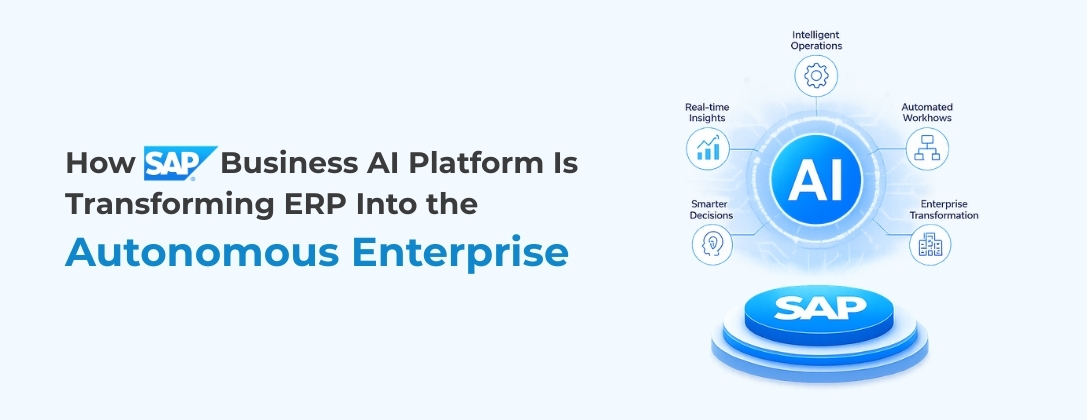
Enterprise technology is undergoing its most significant transformation since the birth of cloud computing. SAP, the global leader in enterprise resource planning, has moved decisively beyond software delivery. Today, SAP is architecting an entirely new category of intelligent business operations - what it calls the Autonomous Enterprise.
At the core of this shift sits the SAP Business AI Platform, a unified foundation that embeds artificial intelligence directly into mission-critical business processes across finance, supply chain, human capital management, and customer experience. This is not AI as a bolt-on feature. It is AI woven into the very fabric of enterprise operations, enabling systems to sense, decide, and act - with minimal human intervention.
For enterprise leaders, the question is no longer whether to adopt AI-driven ERP, but how quickly they can get there. This blog breaks down the SAP Autonomous Enterprise vision, explains the platform's core architecture, and outlines what businesses must do - with the right SAP Consulting Services partner - to lead in this new era.
The Vision Behind SAP's Autonomous Enterprise Strategy
SAP's Autonomous Enterprise strategy is built on a clear thesis: enterprises that automate decisions at the speed of data will outperform those that still rely on manual intervention. This vision centers on three pillars - intelligence, autonomy, and adaptability.
Intelligence means every business process is informed by real-time data, predictive analytics, and generative AI. Autonomy means systems can execute routine and complex decisions independently, escalating to humans only when genuinely necessary. Adaptability means the enterprise can reconfigure itself - processes, workflows, even organizational structure - in response to market changes without months of IT rework.
SAP's roadmap makes this vision concrete through investments in the SAP Business AI Platform, the Joule AI copilot, and what SAP calls the Business AI Suite - a collection of AI-native modules that replace traditional transactional workflows with intelligent, self-optimizing processes. The SAP Autonomous Enterprise is not a future-state aspiration. It is being built right now, and early adopters are already measuring measurable competitive advantages.
SAP Business AI Platform: The Core Foundation of Enterprise AI
What Is the SAP Business AI Platform?
The SAP Business AI Platform is SAP's unified technology stack for developing, deploying, and governing AI across the enterprise. It combines SAP's proprietary AI capabilities with the flexibility of open AI frameworks, including integrations with leading large language models, vector databases, and agentic AI architectures.
Unlike standalone AI tools, the SAP Business AI Platform is context-aware. It draws on decades of SAP business data, process knowledge, and domain expertise to ensure AI outputs are grounded in real enterprise logic - not generic model responses. This contextual grounding is what separates SAP AI from generic AI deployments and why SAP AI Integration delivers outcomes that general-purpose AI tools simply cannot match.
The 3 Layers of the SAP Business AI Platform
The platform is structured across three integrated layers:
- Foundation Layer: Provides the AI infrastructure, including model hosting, vector search, retrieval-augmented generation (RAG), and connection to SAP BTP (Business Technology Platform). This layer ensures AI capabilities are scalable, secure, and governed.
- Business Process Layer: Embeds AI directly into SAP S/4HANA Cloud, SAP SuccessFactors, SAP Ariba, SAP Concur, and other core applications. AI here is not an overlay - it is part of the process flow itself, triggering actions, generating recommendations, and closing loops automatically.
- Experience Layer: Powers Joule, SAP's generative AI copilot, and agent-based interfaces that allow business users to interact with enterprise data and workflows using natural language. This is the layer employees interact with daily, making AI invisible in the best possible way.
Together, these three layers form a coherent stack that transforms SAP from a system of record into a system of intelligence.
Why Businesses Need SAP Integration Services for AI Readiness
The SAP Business AI Platform delivers maximum value only when it is deeply integrated with existing enterprise systems, data lakes, and third-party applications. Fragmented data, siloed systems, and legacy integrations create blind spots that undermine AI accuracy and trust.
This is precisely why expert SAP Integration Services are not optional - they are foundational. A well-structured integration layer ensures that the AI platform has clean, complete, and timely data to work with. Without this, even the most sophisticated AI models produce unreliable outputs. Integration also enables the platform to extend AI capabilities across non-SAP systems, creating enterprise-wide intelligence rather than isolated pockets of automation.
ERP as the Intelligence Engine for Enterprise AI
How ERP Is Powering the Future of Enterprise AI
For decades, ERP was the backbone of enterprise operations - the system that kept financials accurate, supply chains moving, and HR records updated. In the era of the SAP Autonomous Enterprise, ERP has evolved into something far more dynamic: the intelligence engine of the entire enterprise.
SAP S/4HANA Cloud, in particular, is no longer just a transactional system. It is the data-rich, process-aware foundation that feeds the SAP Business AI Platform with the structured business context AI needs to make reliable decisions. When a finance team wants AI to predict cash flow, it draws on ERP transaction data. When a supply chain team wants AI to reroute shipments, it draws on ERP inventory and logistics data. ERP is the source of truth that makes SAP AI Integration trustworthy and actionable.
This reframing of ERP as an intelligence engine has profound implications. It means that ERP modernization is not just an IT priority - it is a competitive AI strategy. Organizations still running legacy ERP systems are not just behind on technology; they are behind on AI readiness.
Why SAP Implementation Services Are Critical for AI-Driven ERP Modernization
The path from legacy ERP to AI-ready SAP S/4HANA Cloud is rarely straightforward. It involves data migration, process redesign, change management, custom development, and complex integrations with existing landscapes. Done poorly, ERP modernization projects deliver little more than a cloud-hosted version of the same old system.
When done well by experienced SAP Implementation Services, ERP modernization becomes a genuine transformation. The right implementation partner does not just configure software; they redesign business processes for AI, establish clean data governance, build integration architectures that support real-time AI consumption, and ensure the organization is culturally and operationally ready to work alongside intelligent systems.
The difference between a successful AI-driven ERP transformation and a costly disappointment often comes down to the quality of the implementation partner. This decision deserves the same strategic attention as the technology choice itself.
SAP Autonomous Suite: The Future of Intelligent Business Operations
Autonomous Finance and Intelligent Business Automation
SAP's Autonomous Finance capabilities represent one of the most mature expressions of the SAP Autonomous Enterprise vision. AI-powered financial close processes can now reduce close cycles from weeks to days. Intelligent accounts payable automation matches invoices, flags exceptions, and processes payments with minimal human touchpoints. Predictive cash flow management surfaces liquidity risks weeks in advance, giving treasury teams time to act rather than react.
The result is a finance function that shifts from reactive reporting to proactive intelligence - one that generates strategic insights rather than spending most of its capacity on transaction processing.
Autonomous Supply Chain Management for Real-Time Operations
Supply chain disruption has become a constant business reality. SAP's autonomous supply chain capabilities respond to this reality with AI that can detect disruption signals - geopolitical events, weather patterns, supplier performance degradation - and proactively adjust procurement, inventory positioning, and logistics routing before disruptions escalate into crises.
Real-time demand sensing, AI-driven supplier risk scoring, and autonomous order management combine to create a supply chain that is genuinely resilient rather than simply reactive. For manufacturers and retailers operating global networks, this capability is becoming a survival requirement, not a competitive luxury.
Autonomous HCM and AI-Powered Workforce Experiences
SAP SuccessFactors has evolved into one of the most AI-enriched HCM platforms on the market. AI-powered talent intelligence recommends learning paths, identifies flight risks, and surfaces internal mobility opportunities before employees begin looking externally. Workforce planning uses predictive analytics to model headcount scenarios against business growth projections.
For employees, the experience layer, powered by Joule, transforms how they interact with HR processes. From benefit enrollment to performance check-ins, AI reduces administrative burden and enriches strategic guidance.
Autonomous Customer Experience and Smarter Engagement
On the customer-facing side, SAP's AI capabilities connect sales, service, and marketing data to create a unified view of customer behavior and intent. AI-driven pricing, next-best-action recommendations, and intelligent service resolution combine to deliver experiences that feel personalized at scale.
For B2B enterprises in particular, SAP's customer experience AI enables sales teams to prioritize accounts with the highest conversion probability, identify renewal risks before they materialize, and automate routine service workflows, allowing human agents to focus exclusively on high-value interactions.
Joule Work: Redefining Enterprise Productivity with AI
How Joule Assistants Are Transforming Business Workflows
Joule is SAP's generative AI copilot - a natural language interface that allows business users to interact with SAP systems without navigating complex transaction codes or report menus. Joule can retrieve information, summarize documents, generate drafts, trigger workflows, and surface recommendations - all through conversational prompts.
For a procurement manager, Joule can instantly surface the top three suppliers by performance score, draft a negotiation brief, and flag open purchase orders at risk of delay - in a single conversation. For a financial analyst, Joule can generate a variance analysis, explain the drivers, and propose corrective journal entries. This is not a chatbot layered on top of SAP. It is an intelligent agent deeply embedded in SAP process logic, capable of taking meaningful business actions.
SAP AI Consulting engagements increasingly focus on helping organizations design Joule adoption strategies - identifying the highest-value use cases, training employees, and measuring productivity impact across business functions.
Open Standards and Enterprise AI Collaboration
SAP has deliberately built Joule and the broader Business AI Platform on open standards, ensuring enterprises are not locked into a single AI model or vendor. The platform supports integration with models from leading providers and can operate alongside other enterprise AI agents.
This openness is strategically important. Enterprises running multi-cloud, multi-vendor technology stacks - which today includes virtually every large organization - need AI that works across their entire landscape. SAP's open approach means Joule can collaborate with agents built on other platforms, including
solutions like Salesforce Agentforce, Sage AI, and ServiceNow AI Agents, creating a coordinated multi-agent enterprise environment that maximizes automation across the entire landscape.
Industry AI and Sector-Specific Enterprise Transformation with SAP Implementation
How Retail Brands Like H&M Are Using SAP Business AI
H&M Group has been among the most visible examples of SAP Business AI in retail transformation. By leveraging SAP's AI-powered demand forecasting and inventory optimization capabilities, H&M has reduced overstock, improved sell-through rates, and aligned production more closely with actual consumer demand patterns.
The underlying logic applies broadly across retail. AI-powered assortment planning, supplier performance management, and real-time pricing optimization are moving from pilot programs to core operational capabilities. Retailers that implement these capabilities with rigorous SAP Implementation Services are gaining measurable advantages in margin performance and inventory turnover.
AI-Powered Manufacturing Innovation in Life Sciences
In life sciences manufacturing, SAP Business AI is addressing some of the sector's most complex operational challenges. Predictive quality management uses AI to identify production anomalies before they result in batch failures - reducing waste and protecting compliance. AI-driven maintenance scheduling reduces unplanned downtime by predicting equipment failures based on sensor data and historical maintenance records.
For pharmaceutical manufacturers navigating stringent regulatory requirements, AI-enhanced batch record management and deviation-tracking capabilities embedded in SAP reduce manual documentation burden and improve audit readiness. These are outcomes that matter enormously in an industry where the cost of compliance failures can run into hundreds of millions of dollars.

Build Your Autonomous Enterprise with SAP Business AI
Transform your ERP into an intelligent, AI-driven business ecosystem with SAP Business AI Platform and SAP S/4HANA. TechWize helps enterprises accelerate automation, improve decision-making, and scale AI-powered operations seamlessly.
Start Your SAP AI TransformationEssential Strategies for Building a Successful Autonomous Enterprise
Strengthening Data Governance and Enterprise AI Security
AI is only as trustworthy as the data it learns from and the actions it takes. Enterprises embarking on SAP AI Integration projects must invest seriously in data governance - establishing clear ownership, quality standards, and lineage tracking across all data sources that feed AI models and workflows.
Security considerations are equally important. AI systems that can trigger business transactions, access sensitive employee data, or influence financial decisions must operate within rigorous access control and audit frameworks. SAP's AI governance tools, combined with SAP BTP security capabilities, provide the foundation - but enterprises need expert guidance to configure them correctly for their specific risk profiles.
Creating Seamless Integration Across Enterprise Systems
Autonomous operations require uninterrupted data flow across every system involved in a given business process. Gaps in integration create gaps in intelligence. A supply chain AI model that cannot access real-time logistics data from a carrier system will produce incomplete recommendations. A finance AI that cannot read data from a subsidiary's legacy system will generate inaccurate forecasts.
Building seamless integration is a deliberate architectural effort, not something that happens automatically during an ERP deployment. SAP Integration Services must be designed with AI consumption in mind - prioritizing real-time data exchange, standardized APIs, and resilient event-driven architectures that ensure AI always has access to the data it needs.
Scaling AI Efficiently Across Business Operations
Many organizations successfully pilot AI in one function and then struggle to scale it across the enterprise. The barriers are rarely technical - they are organizational. Scaling requires standardized AI development practices, enterprise-wide change management, clear ROI measurement frameworks, and governance structures that ensure AI deployments remain aligned with business priorities.
The most successful SAP Autonomous Enterprise programs treat AI scaling as a business transformation initiative, not an IT rollout. They invest in Center of Excellence models, establish AI champions in each business function, and build internal capability alongside external partnership support.
How TechWize Delivers SAP Implementation Services for AI-Ready Enterprises
TechWize is a specialist SAP Consulting Services and implementation partner with deep expertise in helping enterprises build the technical and operational foundations required for AI-driven transformation. Our practice combines hands-on SAP S/4HANA implementation experience with a strategic focus on AI readiness - ensuring that every deployment we lead positions our clients to leverage the full power of the SAP Business AI Platform.
Our SAP Implementation Services are designed for enterprises that need more than a standard ERP migration. We architect AI-ready data models, design integration layers built for real-time AI consumption, and configure SAP Business AI capabilities aligned to your industry's specific use cases. From finance automation to supply chain intelligence to Joule deployment strategy, TechWize brings both technical depth and business process expertise to every engagement.
Beyond SAP, TechWize supports enterprise AI strategies that span multiple platforms. Our experience with SAP AI Integration positions us to help organizations that operate heterogeneous technology landscapes - including those combining SAP with Salesforce, ServiceNow, Sage, and other enterprise platforms - create coherent, coordinated AI ecosystems rather than isolated automation islands.
Whether you are beginning your SAP S/4HANA migration, looking to activate the SAP Business AI Platform on an existing deployment, or seeking a trusted SAP AI Consulting partner to guide your Autonomous Enterprise roadmap, TechWize delivers the expertise and execution capability to move your business forward. Connect with our SAP experts today to learn how we can help you build an enterprise that does not just use AI - but runs on it.
Read Similar Blog
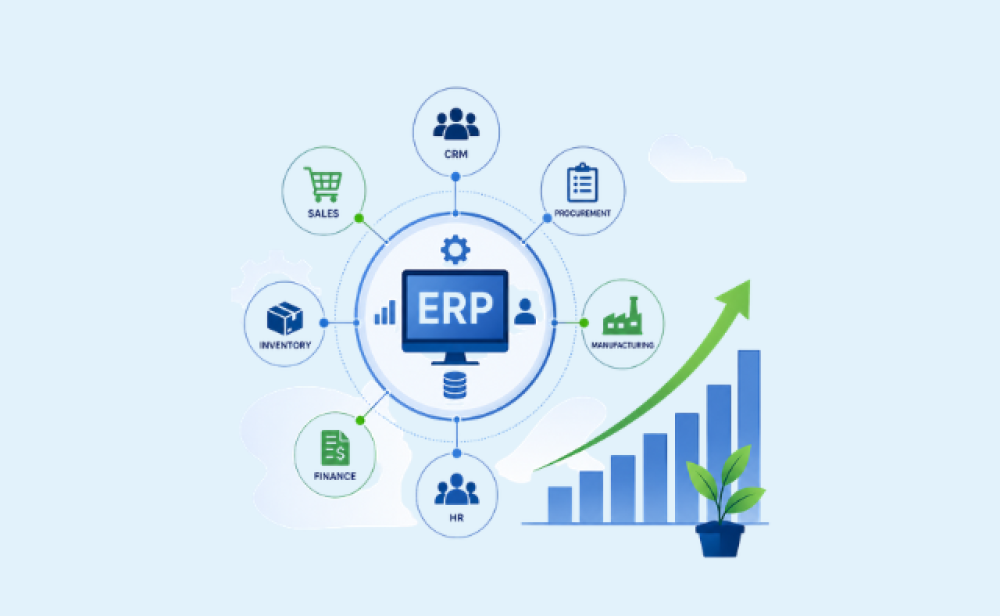
Enterprise Integration Solutions: A Scalable Framework for ERP Automation and Business Growth
Explore More Dynamics 365 Insights ⬩➤Conclusion: SAP Business AI Platform Is Shaping the Future of Autonomous Enterprises
The SAP Autonomous Enterprise is not a concept in a whitepaper. It is a live architectural reality that forward-thinking organizations are building right now. Through the SAP Business AI Platform, Joule, and the full SAP Autonomous Suite, SAP has created the most comprehensive enterprise AI ecosystem available to large organizations today.
The enterprises that will lead their industries in the next decade are those that recognize ERP modernization and AI adoption as a single, unified transformation agenda - not two separate initiatives. The SAP Business AI Platform is the bridge between these two imperatives, turning decades of business process data into real-time intelligence that drives autonomous operations.
The window for early-mover advantage in enterprise AI is open - but it will not stay open indefinitely. The time to build your Autonomous Enterprise is now. With the right SAP Implementation Services, SAP Integration Services, and SAP Consulting Services partner, your business can move from reactive operations to proactive, intelligent autonomy faster than you might expect.